Abstract
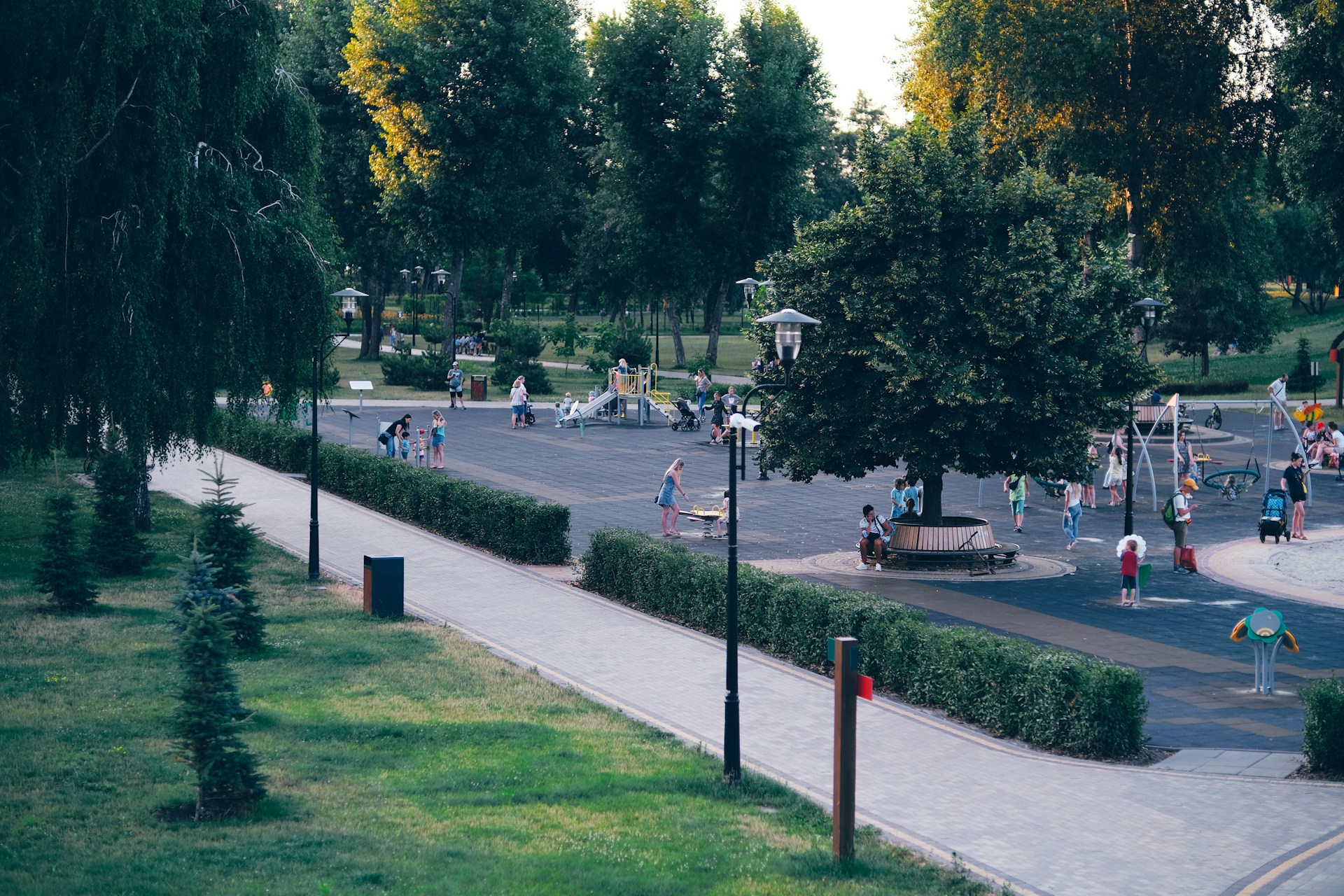
The article deals with the problem of access to recreation for children with reduced mobility. Using the example of a historical residential area in the former Kadetskyi Hai (Cadet Grove) in Kyiv, problems with access to playgrounds for children with reduced mobility were revealed. Despite the unique ecological possibilities of the area and its own ecosystem with plenty of greenery and clean air, children’s leisure areas remain unorganized. The Polish (in Cracow and Oświęcim) experience of playgrounds designed in historic neighborhoods for children with disabilities was analyzed. In Poland, there are two approaches to meeting the needs of children with disabilities in playgrounds. The first option is the so-called integrated one, when playground equipment is available for both healthy and disabled children. It aims to integrate children into the community. The second option is only for children with disabilities, so the play equipment has some specificity for a child in a wheelchair.
Journal: International Journal of Conservation Science
Year: 2025