Abstract
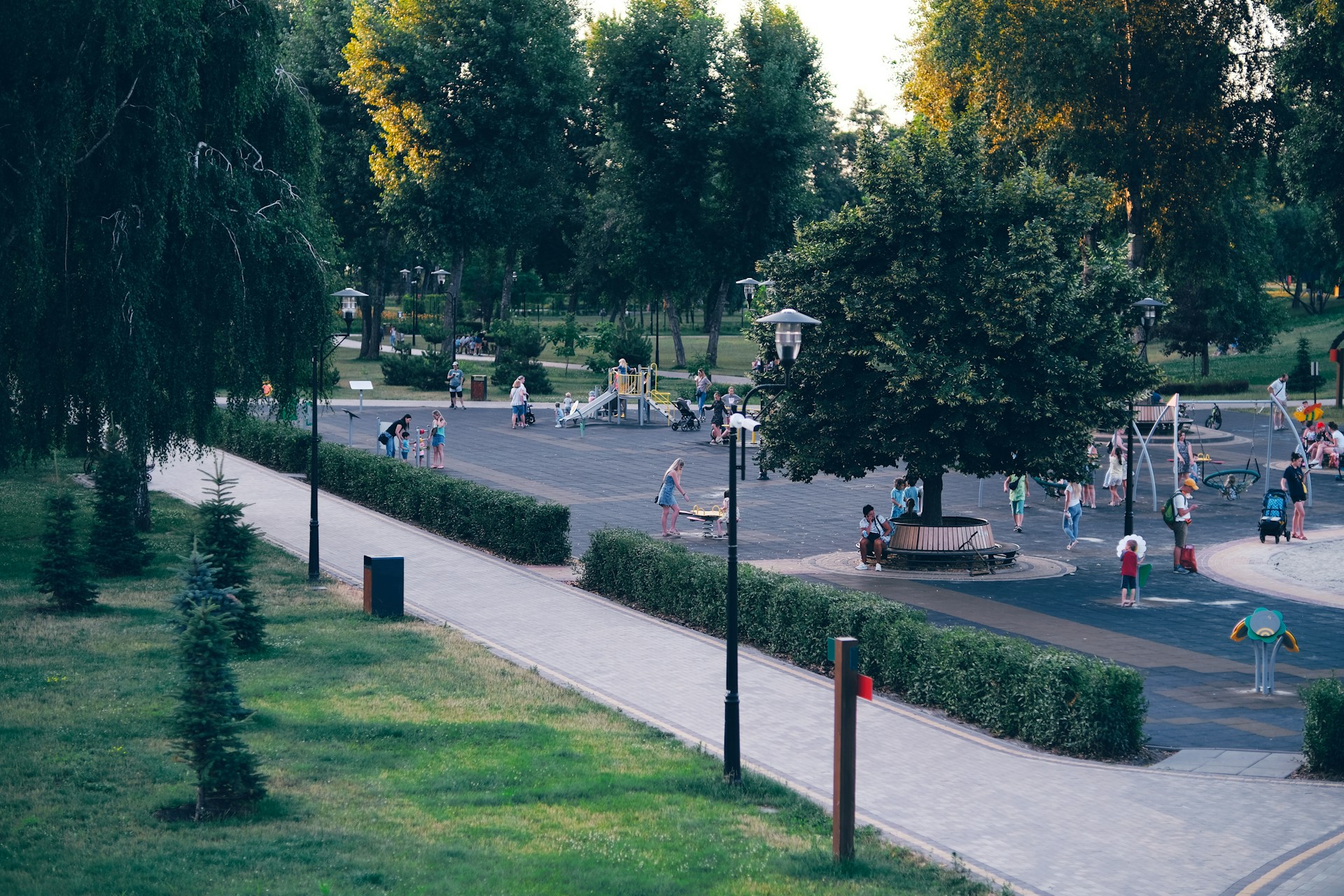
Outdoor play environments such as playgrounds provide opportunities for children to develop language, social-emotional, cognitive, and motor skills through interactions with peers and adults. Traditionally, direct observation has been used to measure child and teacher talk on the playground. In this proof-of-concept study, we used sensing technology tools, namely the Ubisense and the Language ENvironmental Analysis (LENA), to capture and examine talk among young children and educators on an early childhood center playground. We collected over 28,000 1-s speech-audio and location data points with toddlers (n = 11). Descriptive results indicate that children with developmental disabilities/delays (DD/D) experienced more talk from educators and peers compared to those with typical development in specific areas of the playground. The use of sensing technology represents a groundbreaking advancement for understanding variations in talk between teachers and children in an outdoor play environment.
Journal: Topics in Early Childhood Special Education
Year: 2025