Abstract
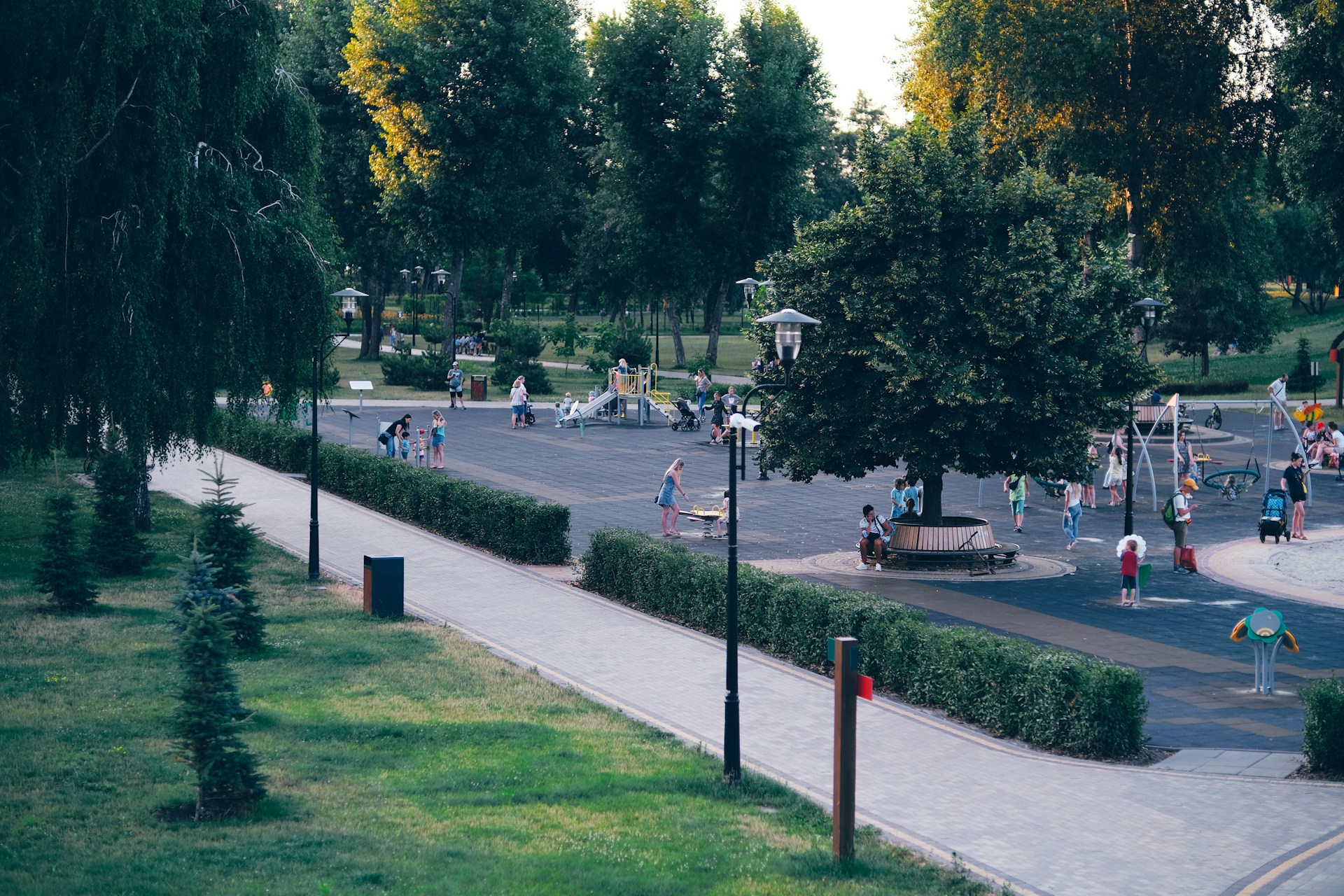
The design of playground environments significantly influences children’s exposure to Ultraviolet Radiation (UVR), which impacts long-term health. Excessive UVR exposure can lead to serious health issues such as skin cancer. Adequate UVR is crucial for vitamin D synthesis, which supports cardiovascular and skeletal development. This study evaluates the effectiveness of current playground designs in providing a healthy UVR environment by collecting 3-dimensional UVR measurements from eight playgrounds in College Station, Texas, across four seasons. We assessed UVR exposure based on two key metrics: the Minimal Erythema Dose (MED) and the Minimal Vitamin D Dose (MDD).
Our findings reveal non-neglectable UVR from the southern sky, particularly during the fall and winter. Trees and a combination of artificial canopies and trees offer more uniform UVR protection compared to other shade structures. During summer, children in College Station face a high risk of excessive UVR exposure, potentially leading to sunburn or skin redness, even under artificial canopies. Conversely, in winter, children may receive insufficient UVR during a 1-h outdoor period, especially under central artificial shades. Based on these observations, we recommend several design solutions to enhance UVR protection, including site-specific UVR evaluations before design, the use of seasonally adjustable shade structures, and strategic planning of children’s activities and exposure times according to seasonal and UVR conditions.
Journal: Environmental Research
Year: 2025