Abstract
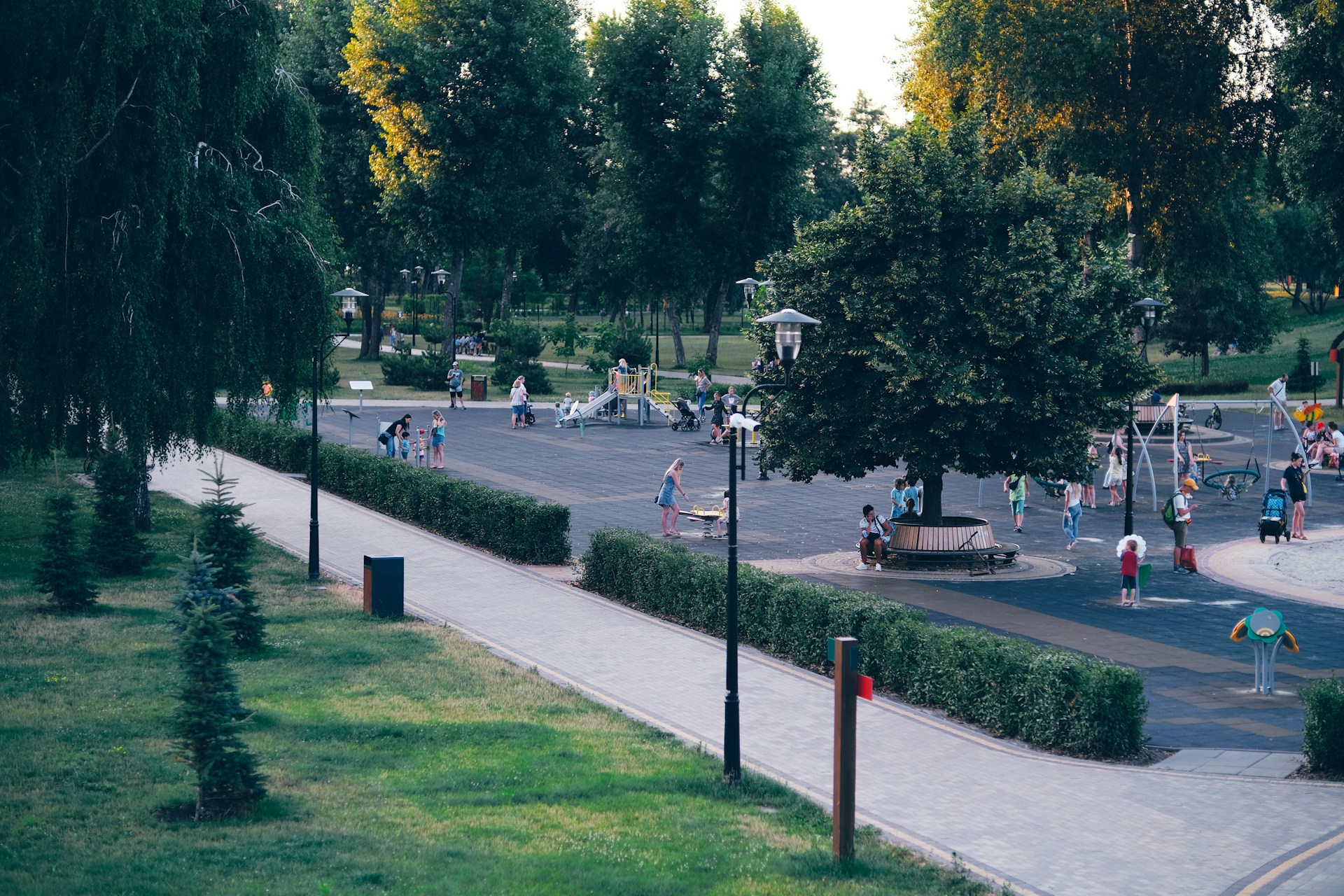
The outdoor activities, especially playing in the playground (PG), are crucial for improving children’s cognitive, social, and emotional development as well as preventing childhood obesity. Children’s exposure to persistent organic pollutants (POPs) in outdoor environments remains under-investigated, particularly in playgrounds located in densely populated areas and where synthetic materials are commonly used. This study presents the first multi-class evaluation of POPs, including polycyclic aromatic hydrocarbons (PAHs), polychlorinated biphenyls (PCBs), phthalic acid esters (PAEs), and polybrominated diphenyl ethers (PBDEs) in the fine dust (< 63 µm) from 15 playgrounds in Kocaeli, Türkiye, an industrialized urban region. Dust samples were collected from 12 playgrounds with synthetic surfaces and plastic toys, and 3 playgrounds with natural soil surfaces and wooden toys. Concentrations of Σ13PAEs ranged from 1,643 to 23,347 ng/g, significantly exceeding the concentrations of other pollutant groups. Σ16PAHs ranged from 32.67 to 420.97 ng/g, Σ5PBDEs from 0.54 to 97.99 ng/g, and Σ14PCBs from 3.48 to 43.20 ng/g. Of target measured pollutants, PAHs were detected in 85.42% of parks, PBDEs in 88%, PCBs in 61.6%, and PAEs in 79.5%. Except for PCBs, all target pollutants were observed at higher levels in plastic toys on synthetic-surfaced playgrounds than in those with soil surfaces and wood toys. Based on the probabilistic assessment of exposure of children to measured pollutants using Monte Carlo Simulation, dermal contact and non-dietary dust ingestion showed that PAE had a higher dose (3.22 × 10⁻⁴ mg/kg/day) followed by PAHs (6.55 × 10⁻⁵ mg/kg/day), and PBDE and PCBs were at ~ 10–6 mg/kg/day. The probabilistic cancer risk (R) associated with exposure to BaP and BDE-209 was 3.07 × 10⁻⁵ and 3.43 × 10⁻⁸, respectively. Cancer risk from BaP slightly exceeded the USEPA benchmark of 1 per one million, while BDE-209 posed negligible risk. Overall, this study underlines that children are more exposed to PAE pollutants compared to other urban pollutants. The findings highlight the need to reconsider the widespread use of synthetic playground materials due to their potential to emit endocrine-disrupting and carcinogenic pollutants. Regulatory frameworks should incorporate chemical safety criteria for children’s recreational environments, alongside mechanical safety standards.
Journal: Water, Air, and Soil Pollution
Year: 2025