Designing playgrounds for all: Supporting children with blindness or low vision
Introduction and aim
Public playgrounds are vital spaces for children to explore, play, and learn essential skills – both physical, social, and emotional. For children with blindness or low vision (BLV), these spaces often do not meet their needs.
Research has shown that most playgrounds are, typically, not accessible to BLV children. This may lead to developmental delays and limited opportunities for social interaction. To address these gaps, Reinhardt and colleagues (2023) explored how playgrounds can better support BLV children through thoughtful and inclusive design.
In their study, they first reviewed existing research literature and approaches to identify key barriers faced by BLV children in playgrounds. Next, they explored two case studies: one on the use of tactile maps to help children with blindness or low vision navigate playgrounds, and another based on surveys of parents and vision specialist teachers about the experience of school playgrounds.
Building on these findings, the researchers introduce a best-practice matrix for inclusive design aimed at BLV children and their parents and carers along with key strategies.
This brief aims to encourage designers, city planners, and community groups to support inclusive playground design while considering the needs of people with BLV.
1. Policy does not translate into practice
While global and national guidelines support inclusive play, most playgrounds still fail to support children with blindness or low vision. Design standards tend to emphasize general accessibility (like ramps or seating), overlooking items such as orientation maps, signage, natural areas, sensory play equipment, or tactile elements. Items that may be critical for blind or low-vision users.
Meeting only the bare minimum standards means missing the point – children with disabilities, especially those with vision loss, often miss out on the full benefits of play.
2. Concerns reduce play opportunities
Safety concerns have reduced challenging play opportunities. However, risky play is vital for children’s development – even more so for BLV children.
They face extra hurdles to stay active and when parents lose confidence in their child’s abilities, the child loses confidence too. This may lead to less freedom, less movement, and fewer chances to explore.
3. Design without children
Playgrounds are often designed for children, not with them. Designs frequently overlook how children actually play or fail to meet the diverse cognitive, physical, and sensory needs of children – especially those with disabilities.
Children’s perspectives are rarely included in the design process, leading to equipment that’s underused, thereby missing opportunities for truly inclusive play.
4. Social challenges
Play is how children learn to socialize, problem-solve, and grow. For children with disabilities, this can be challenging. Children with BLV often struggle to fully take part in play with their sighted peers – and families can feel unwelcome too.
The general approach of ‘leaving no-one behind’ with customized play activities and thoughtful design may help BLV children build friendships, feel included, and share their unique way of experiencing the world.
5. When accessibility feels exclusive
Efforts to improve accessibility sometimes rely on specialized equipment. But for children with blindness or low vision, equipment that’s clearly marked or separated from what others use can feel exclusive or acciden tally discriminatory and prevent social exchanges.
As a result, it’s often avoided, which means fewer opportunities for social interaction and inclusive play.
That’s where Universal Design comes in. Instead of creating separate features, it focuses on inclusive spaces that ensure children have ample opportunities for social inclusion, cognitive development, sensory stimulation, access to nature and physical exercise.
Universel Design playground features can be:
- Musical play zones
- Textured surfaces
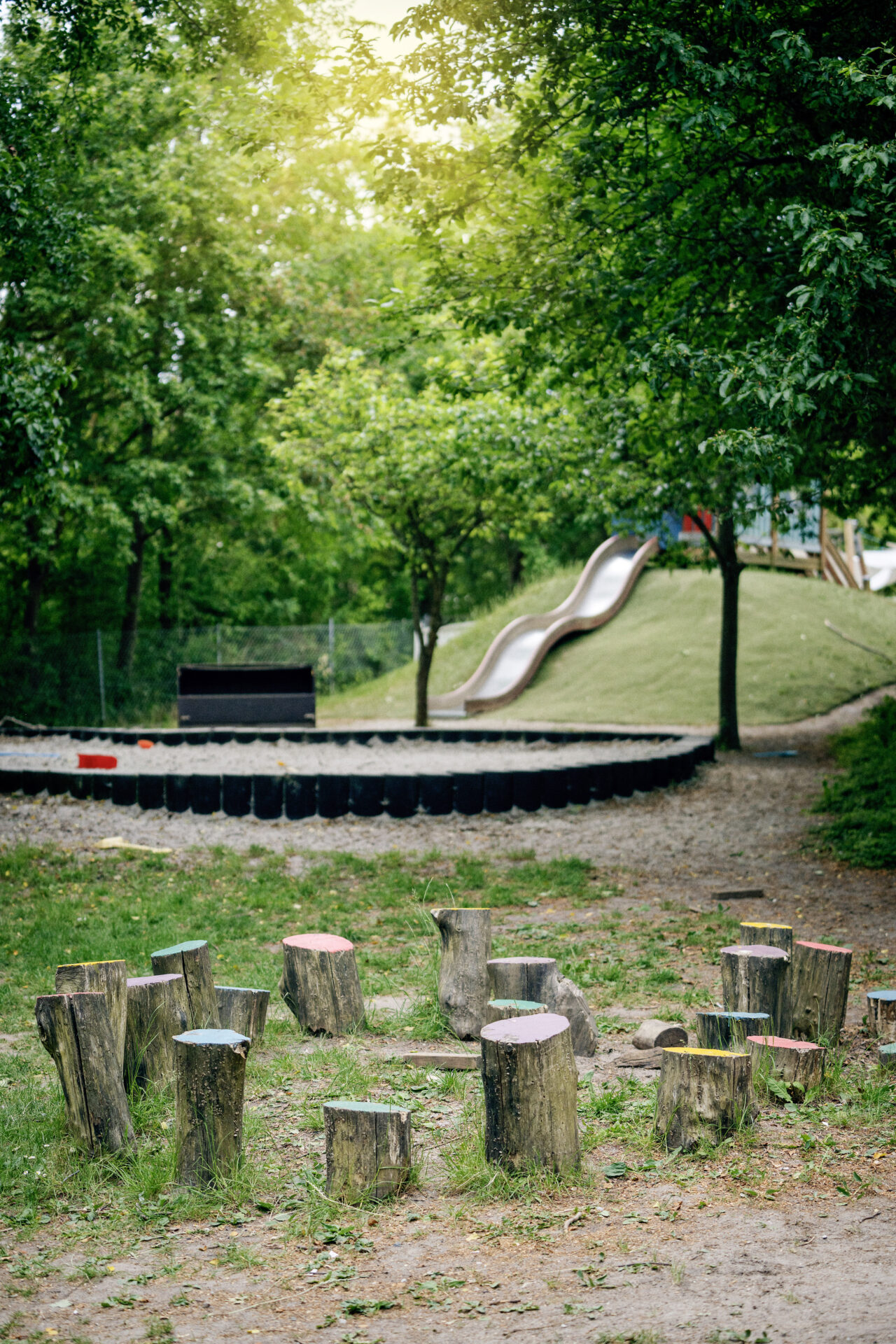
- Sandpits
- Rolling landscapes
Five barriers that’s stopping children with BLV from playing freely
The review of the research literature uncovered five key barriers that limit how BLV children experience playgrounds:
Matrix of inclusive playground design for children with blindness or low vision
Drawing on real-world playground examples, the researchers compiled the first iteration of a best-practice matrix in inclusive design aimed at BLV children and their parents and carers.

3D maps and tactile models
Help children orient themselves using touch, depth, and height cues for a clearer mental understanding of the location.
Inclusive play concepts
Create spaces where children can engage in imaginative play together – in cozy nooks, varied zones, and equipment that let children approach one another gradually and invite others to join.
Multi-sensory equipment
Use sound, texture, and responsive features to make play accessible. Sensor-based responses that react to the user’s actions help ensure that BLV children can actively participate.
Open and natural play
BLV children are encouraged to expand their spatial knowledge and engage in learning that occurs through engaging with one’s bodily senses. However, further research is needed in this area.
Shared experiences
Prioritize shared activities that encourage interaction and social confidence.
Thoughtful retrofitting
Revise and update existing playground equipment with care, based on the lived experiences, needs, and input of BLV children.
Strategies to better support children with blindness or low vision
To better support children with blindness or low vision (BLV) and their families and carers, several key strategies have been identified:
Downloads
Please click on the download link below to obtain a copy of each file
Main Editors




Projects
Explore our institute’s active engagement in developing playgrounds’ future through innovative research and current projects.
Briefs
We are dedicated to sharing valuable insights from research studies and reviews through concise and accessible publications.
Articles
Explore our article database for a comprehensive array of global research and insights, offering diverse perspectives and knowledge.
News
Stay up-to-date and engaged through the latest news, project updates, events, and activities specific to playground research.