Your search returned 167 results


Which factors in the school playground influence tweens’ physical activity?
Which factors in the school playground influence tweens’ physical activity?
School recess is a crucial opportunity for children to be physically active. Nevertheless, we need to understand which factors in the school playground influence children’s physical activity.
Identifying these factors, whether they are individual, social, cultural, physical, organizational, political or environmental, can help guide future interventions for promoting active recess time.
This brief provides insights from two PhD theses conducted in 21 Danish and five New Zealand school playgrounds, involving 10-13-year-old children (tweens). The data are based on interviews, observations, accelerometer, and GPS measurements.
The insights we present in this brief, are valuable for policy and decision makers responsible for school playgrounds, as well as researchers and professionals working to design and plan school playgrounds.


YoPA – The Youth-centred Participatory Action Study
Many adolescents do not meet the current physical activity guidelines. Interventions targeting adolescents have often yielded disappointing results, primarily due to their lack of context specificity and top-down, adult-driven implementation.
Our primary objective is to collaboratively create, implement, and evaluate activity initiatives to enhance the well-being and physical activity levels of adolescents aged 12 to 18 who find themselves in vulnerable life situations.
Our study
This study will be conducted in vulnerable neighborhoods across four countries: the Netherlands, South Africa, Nigeria, and Denmark.
The Danish segment of the study is led by the World Playground Research Institute and will be centered in the Nørresundby neighborhood in the city of Aalborg. Adolescents from two youth centers in this area will actively participate in tailoring these activity spots.
Read more about this project here: YoPA Linktree.
Find a video about YoPA’s first year here: YoPA’s first year.




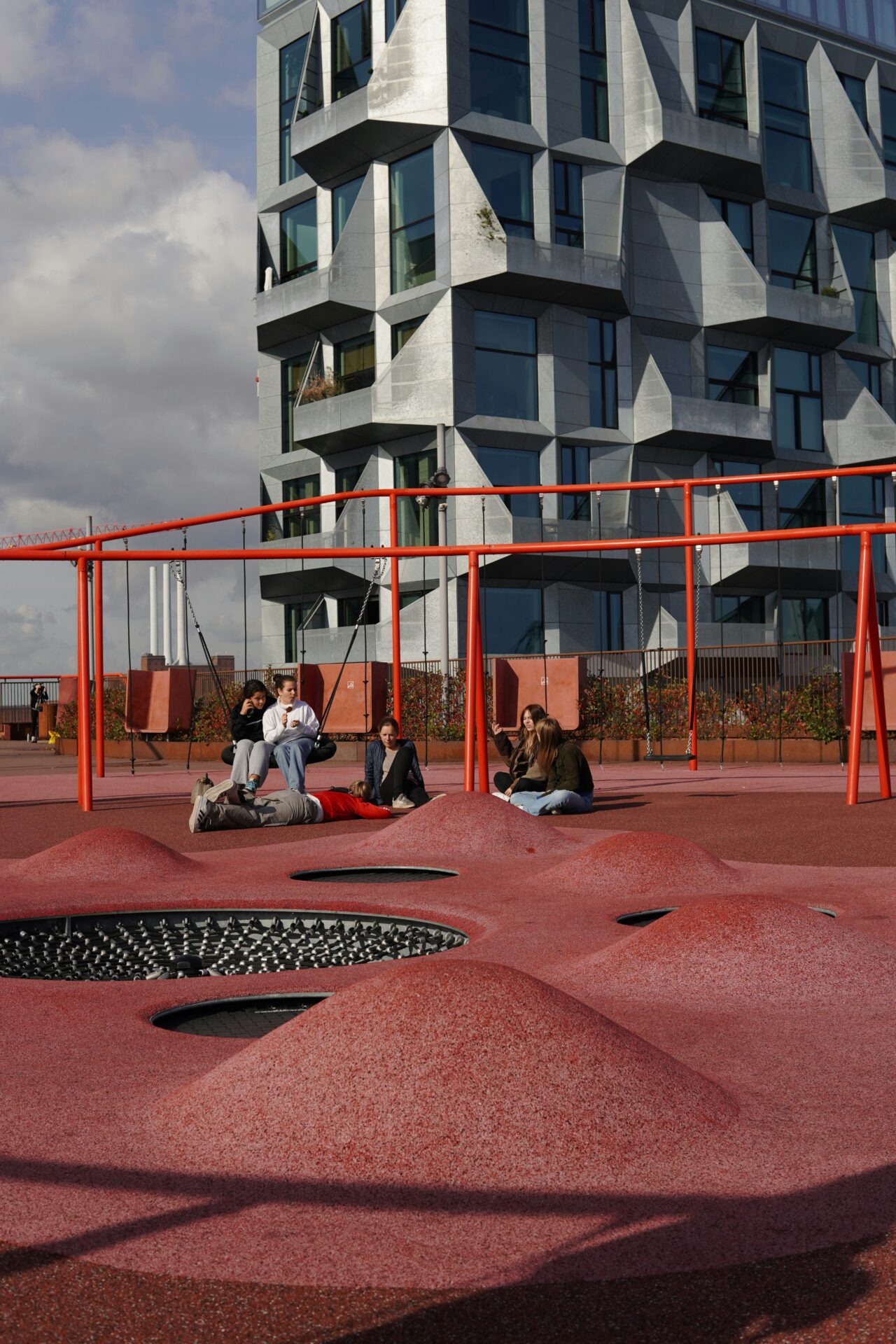
Gender typologies in the school playground
Gender typologies in the school playground
Boys are more physically active than girls in the school playground. To build school playgrounds that can improve both boys’ and girls’ physical activity it is crucial to understand the cultural practices that shape and are shaped by gender activities in the school playground.
This brief provides insights from a study conducted in 17 Danish school playgrounds where 111 10-11-year-old children were interviewed. The study was led by Charlotte Skau Pawlowski from the World Playground Research Institute.
This brief is particularly relevant for policy and decision makers involved in creating and maintaining playground environments in schools. It may also be of interest to researchers and professionals designing school playgrounds.

School playgrounds for well-being
Research has highlighted how school playgrounds can impact kids’ social and mental well-being. However, there’s a gap in understanding the exact effects of these spaces on children’s mental health, calling for more comprehensive and evidence-based research.
The aim is to investigate if re- or new-build playgrounds in the schoolyard (build age-appropriate and in accordance with knowledge on what children want) can improve social and mental health in 6-12-year-old children.
The study is an intervention study in five schools – two in the UK and three in Denmark. Systematic observation and survey will be used to measure social interactions, well-being, and enjoyment of activity and play during recess before and after intervention. The follow-up measurement will be conducted 12 months after the baseline measurement.
Child care center characteristics associated with preschoolers’ physical activity

Children’s physical activity and the preschool physical environment: The moderating role of gender
Increasing Physical Activity in Childcare Outdoor Learning Environments: The Effect of Setting Adjacency Relative to Other Built Environment and Social Factors

Space, body, time and relationship experiences of recess physical activity: a qualitative case study among the least physical active schoolchildren

Predictors of segmented school day physical activity and sedentary time in children from a northwest England low-income community
Playground Characteristics to Encourage Children to Visit and Play

A Multicomponent Schoolyard Intervention Targeting Children’s Recess Physical Activity and Sedentary Behavior: Effects After 1 Year

The hidden value of in-between spaces for children’s self-directed play within outdoor school environments

Long-term effects of a playground markings and physical structures on children’s recess physical activity levels

The effect of playground-and nature-based playtime interventions on physical activity and self-esteem in UK school children
Playground activities and gender variation in objectively measured physical activity intensity in Australian primary school children: A repeated measures study

Will the children use it?—A RE-AIM evaluation of a local public open space intervention involving children from a deprived neighbourhood

Why are children different in their moderate-to-vigorous physical activity levels? A multilevel analysis

Critical factors influencing adolescents’ active and social park use: A qualitative study using walk-along interviews
